
Childhood experiences have a profound impact on how we experience the world as adults. They establish the expectations we set for ourselves, those we interact with, and the world in general. The home environment – parents and caretakers – plays a huge role in the child’s development. But the school environment, and teachers, play an equally important, in some regards even more so, since these tend to be the first experiences outside the child’s comfort zone. So, what should such an environment provide?
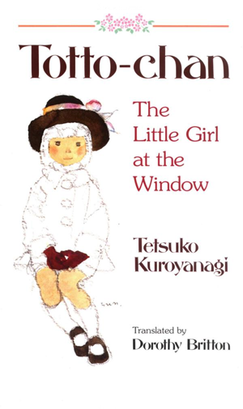
Totto-chan: The Little Girl at the Window is an autobiographical account of the experiences of Tetsuko Kuronayagi in the two or so years she studies at Tomoe Gakuen, a non-traditional school situated in southwest Tokyo (around 1945). Written like a journal, the book describes the day-to-day activities and experiences at the school that leaves a lasting impression on the book’s main character, the six-year-old Totto-chan.
Totto-chan walks into Tomoe for the first time under mildly troubling circumstances. She was dismissed from her previous school for unruly behavior (Totto is unaware at the time) and this has her mother on edge as she is unsure if the school will accept the child. But the anxiety disappears the moment mother and child meet the school’s headmaster, a kindly, old man named Sosaku Kobayashi.
At this first meeting with the headmaster, Totto is asked to introduce herself and given the time and space to talk about whatever she wants. In all, this first meeting lasts four hours, the headmaster giving his full attention without any interruption. The headmaster’s generosity and willingness to listen eased any concerns Totto-chan had about the new environment and instantly falls in love with the school.
The school’s headmaster Kobayashi was also its founder and a man devoted to bringing the best out of children. In the epilogue, Tetsuko describes him as someone who “believed all children are born with an innate good nature which can be easily damaged by their environment and the wrong adult influences. His aim was to uncover their “good nature” and develop it so that the children would grow into people with individuality.” He did this with Tomoe by providing an environment that allowed children to tap into their interests and talents, a space that allowed them to be enlightened and empowered.
Children must be taught how to think, not what to think.
Margaret mead
Tomoe was a non-traditional school in many ways. The school had a curriculum, but children had the autonomy to plan their days around lessons and activities they enjoyed instead of conforming to a rigid structure. Teachers served as guides, not instructors. They learnt from books and lectures but had regular interactions with the real-world. At lunch they learnt about good eating habits, the different types of foods, and how they were prepared. And on their regular afternoon walks, they learnt about nature, the environment, and the history of the region.
There was another aspect that was quite unique to Tomoe. Contemporary schools focussed on developing the skills and temperament needed to participate in industrial society – knowledge from books, obedience, respect for authority, and such. Kobayashi bemoaned the loss of individuality in such a system and feared it would result in a society lacking in empathy and incapable of original thought. To counter this trend, Tomoe focussed on cultivating a sense of harmony between the child’s mind and body. On top of the standard educational fare, the school incorporated music into many of its activities, including a daily program of Eurythmics, resulting in an environment that awakened the imagination, promoted creativity, and ensured the child’s “spirit” stayed intact.
Having eyes, but not seeing beauty;
Having ears, but not hearing music;
Having minds, but not perceiving truth;
Having hearts that are never moved and therefore never set on fire.
These are the things to fear, said the headmaster.
Totto-chan: The Little Girl at the Window was an easy but enlightening read. In simple, beautiful language the author (and translator) capture the innocence and inquisitiveness of the child trying to understand the world. I read a good chunk of this book with my two kids (about the same age as Totto-chan) and saw how excited they were to talk about the problems and situations that came up. Along the way I learnt that the only way to “teach” a child anything is to frame the concept or idea within the context of something they’re already interested in. If you’re able to do this, you’ll never struggle to get their attention.
The story also showed that with the proper support and encouragement every child can flourish, even one as mischievous as Totto-chan. I had a good education and here I only mean that I was given the support and encouragement by teachers and family to pursue my interests. Even so, I was deeply envious of the care and attention that Kobayashi showered on his students. He made sure that his students retained their sense of wonder and importantly, with his repeated focus on students’ positive attributes, ensured they developed confidence in themselves and their abilities.
Tetsuko Kuronayagi, the grown-up Totto-chan, made one of her first appearances on American television shortly after the release of this book. In the clip below of her interview with Johnny Carson, you’ll clearly see that mischief is woven into the fabric of her personality. A quality that most of her early teachers deplored turns out to be an essential part of her personality and her success as a TV host. Who knows what might have happened if those early teachers had their way?
Looking for more? Watch Sir Ken Robinson’s TED talk ‘Do schools kill creativity?’
 The Skatter Brain